
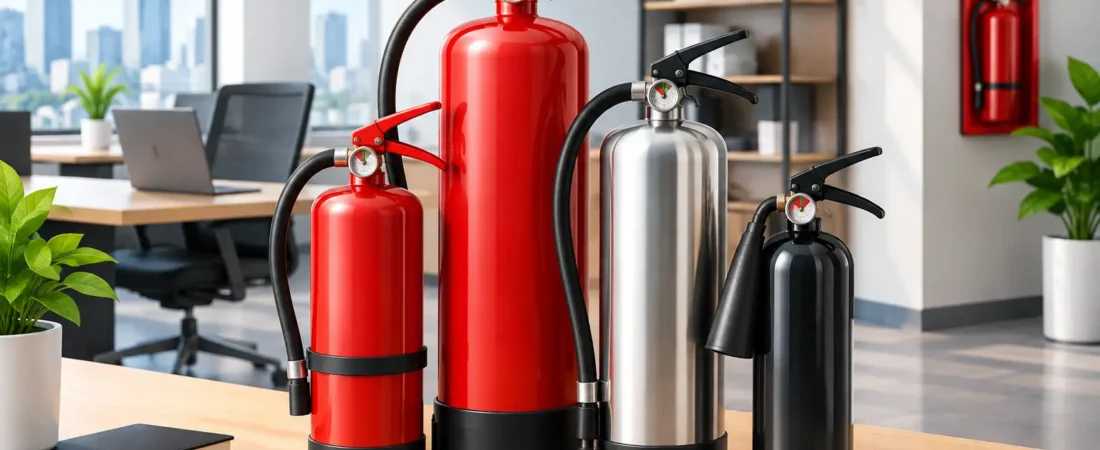
A fire extinguisher for office use is easy to overlook when the workday is focused on clients, staff, inventory, and deadlines. But a small fire can change the course of a business day quickly. The right extinguisher, placed where people can reach it and maintained on schedule, gives your team a practical first line of defense while they evacuate and emergency responders are on the way.
For offices in Summerville, Charleston, and nearby communities, the goal is not simply to hang a red cylinder on the wall. It is to make sure the equipment fits the hazards in the workplace, is properly located, and will operate when it is needed.
What Type of Fire Extinguisher Does an Office Need?
Most traditional offices need protection for ordinary combustibles, flammable liquids, and energized electrical equipment. Paper files, cardboard, furniture, trash containers, cleaning supplies, computers, printers, and break-room appliances all create different fire risks.
For many office settings, an ABC-rated dry chemical extinguisher is the practical choice. These multipurpose extinguishers are designed for Class A fires involving materials such as paper, wood, and cloth; Class B fires involving flammable liquids; and Class C fires involving energized electrical equipment. That makes them a common fit for administrative areas, reception spaces, conference rooms, and general work areas.
Still, one extinguisher type does not automatically fit every area of a facility. A small professional office with desks and a copier has different needs than a mixed-use office with a maintenance room, warehouse storage, company vehicles, or a commercial kitchen. The right selection depends on the building layout, occupancy, equipment, and materials on site.
A break room with only a microwave and coffee maker may be covered by the general office protection plan. A workplace with cooking equipment that produces grease-laden vapors may need a Class K extinguisher and a properly maintained kitchen suppression system. Server rooms, workshops, and storage areas may also call for a more specific review.
Size Matters as Much as the Extinguisher Type
The extinguisher’s rating and capacity affect how much firefighting capability it provides. A compact unit may be easier for employees to handle, while a larger unit provides more agent and can be better suited to larger spaces or higher-risk areas.
For many offices, a common starting point is a multipurpose ABC extinguisher with a rating appropriate for the occupancy and hazards. However, selecting equipment solely because it is common can create a gap in protection. A facility with a large copy area, records storage, maintenance supplies, or attached warehouse space may require additional extinguishers, different ratings, or more strategic placement.
Local code requirements, building conditions, and the authority having jurisdiction can all influence the final plan. A qualified fire-protection provider can assess the space and recommend a practical setup without leaving managers to sort through ratings, mounting requirements, and inspection needs on their own.
Where to Place Office Fire Extinguishers
An extinguisher is only useful if a person can reach it safely. It should be visible, accessible, and positioned along normal paths of travel, not hidden behind furniture, storage boxes, or a closed office door.
In a typical office, placement often deserves attention near these areas:
- Main exits and common travel paths
- Break rooms and appliance areas
- Copy, print, and mail rooms
- Electrical, storage, or maintenance spaces
The goal is to give employees reasonable access without requiring them to move toward the fire to retrieve an extinguisher. For example, an extinguisher near a break-room exit can be more useful than one mounted directly beside the microwave or coffee station where a fire could block access.
Mounting height, signage, visibility, and clearance also matter. A unit set on the floor can be kicked, damaged, or buried by supplies. A unit mounted too high or blocked by furniture may be difficult to use in an emergency. Good placement supports fast decisions during a stressful moment.
Inspection and Maintenance Keep Equipment Ready
Buying or installing an extinguisher is only the first step. Office fire extinguishers require ongoing attention to remain serviceable and compliant. A unit with a damaged hose, broken tamper seal, missing pin, low pressure, or outdated service tag may not be ready when a fire starts.
Employees or designated staff members should perform a simple visual check each month. This does not replace professional service. It is a quick confirmation that the extinguisher is in its assigned location, remains accessible, has no visible damage, and shows normal pressure when the unit has a gauge.
Professional inspection and maintenance are also required on a regular schedule. Depending on the extinguisher type and condition, service can include inspection, repair, recharging after use, internal maintenance, or hydrostatic testing. Even a brief discharge can leave an extinguisher unable to perform as expected, so any used unit should be serviced promptly.
Keeping clear records matters, too. Service tags and documentation help managers track what was completed, identify equipment that needs attention, and demonstrate that the business is maintaining its fire-safety responsibilities. This is especially helpful for multi-tenant properties, facilities with several departments, and businesses preparing for an inspection.
Train Employees for a Safe Response
An extinguisher can help contain a small, early-stage fire, but it is not a reason for employees to take unnecessary risks. Your emergency plan should make evacuation the priority. Staff should know where exits are, how to alert others, when to call 911, and where to meet outside the building.
If employees are expected to use extinguishers, they need appropriate training and clear direction. The familiar PASS method can help: pull the pin, aim at the base of the fire, squeeze the handle, and sweep side to side. But the decision to use an extinguisher comes first.
Employees should leave immediately if smoke is heavy, the fire is spreading, visibility is poor, they do not have a clear exit behind them, or they are uncertain about the extinguisher type. No office equipment, records, or furniture is worth risking a person’s safety.
Training is also a good time to address a common mistake: using water on every fire. Water may be appropriate for certain ordinary combustible materials, but it can be dangerous around energized electrical equipment and ineffective on flammable liquid fires. Matching the extinguisher to the hazard is part of being fire ready.
Common Office Extinguisher Problems to Avoid
Many office fire-protection issues come from routine changes rather than neglect. A renovation can move an extinguisher behind a partition. New furniture can block access. Storage can accumulate around a cabinet. An office expansion can add hazards and increase travel distances without anyone updating the extinguisher plan.
Another issue is treating every red extinguisher as interchangeable. Equipment may look similar while carrying different ratings, agents, and servicing requirements. The right choice for a general office area may not be the right choice for a kitchen, workshop, or chemical storage area.
Managers should also avoid waiting for a failed inspection to address damaged or missing equipment. If an extinguisher has been discharged, knocked down, corroded, removed from its location, or exposed to conditions that may affect performance, schedule service right away. Fast correction protects people and avoids a small equipment issue becoming a larger compliance concern.
A Practical Plan for Office Fire Readiness
A dependable office fire-safety plan starts with a walkthrough. Identify the locations where fires are most likely to begin, review exit routes, confirm where extinguishers are located, and check whether every unit is accessible and properly maintained. Then establish a recurring service schedule so readiness does not depend on someone remembering a date on the calendar.
Southern Fire Solutions helps local businesses manage extinguisher installation, inspections, repairs, and ongoing service with a straightforward focus on operational readiness. For offices with specialized risks, a broader review can also identify where suppression equipment or additional protection may be needed.
The best time to correct an extinguisher problem is during a calm walkthrough, not when an employee is facing smoke and seconds matter. Keep equipment visible, keep it serviced, and give your team a clear plan to get out safely.