
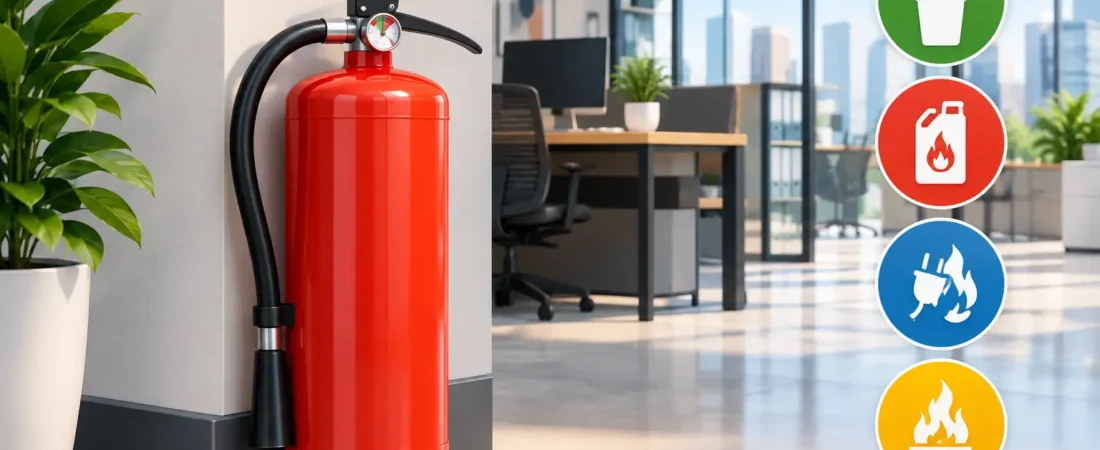
A fire extinguisher mounted near the exit is only useful if it can handle the fire most likely to start in that area. That is why the best fire extinguisher for business is rarely a single model used everywhere. A restaurant kitchen, retail stockroom, office break room, warehouse, and light industrial work area can all require different protection.
For business owners and facility managers, the goal is straightforward: provide the right extinguishers, keep them accessible and serviceable, and make sure employees know when it is safe to use them. Good fire protection supports safety, code compliance, and business continuity without adding unnecessary complexity to daily operations.
Start With the Hazard, Not the Extinguisher
Fire extinguishers are rated by the types of fuel they can put out. Selecting one begins with an honest look at what burns, where it is located, and how the space is used. A general-purpose extinguisher may be appropriate for much of a facility, but it should not be treated as a catch-all answer for every risk.
Class A fires involve ordinary combustibles such as paper, wood, cloth, cardboard, and many plastics. Offices, hotels, retail stores, apartment common areas, and storage spaces commonly have Class A hazards.
Class B fires involve flammable liquids and gases, including gasoline, solvents, oils, paints, and some cleaning products. Maintenance rooms, auto-service areas, manufacturing spaces, and locations that store fuel or chemicals may need Class B protection.
Class C refers to energized electrical equipment. Electrical panels, server areas, appliances, office equipment, and machinery can create this risk. Once electricity is disconnected, the remaining fire is generally treated according to the material that is burning.
Class D fires involve combustible metals. These are specialized hazards found in certain machining, manufacturing, laboratory, and industrial operations. They require a specific extinguishing agent matched to the metal involved.
Class K fires involve cooking oils and fats. Commercial kitchens need Class K extinguishers in addition to a properly maintained kitchen hood suppression system. An ABC extinguisher is not a substitute for a Class K unit at a fryer or range.
Why ABC Units Work for Many Businesses
For many offices, retail locations, multifamily properties, hospitality venues, and general warehouses, a multipurpose dry chemical ABC extinguisher is the practical starting point. It is designed for Class A, B, and C hazards, making it suitable for common combustible materials, many flammable-liquid risks, and energized electrical equipment.
The letters matter, but the numbers on the label matter too. A rating such as 2A:10B:C indicates tested firefighting capability for Class A and Class B fires, along with suitability for energized electrical equipment. Higher ratings generally provide greater capacity, but bigger is not automatically better. A larger extinguisher is heavier, and an extinguisher employees cannot safely lift, carry, or operate may not be the right choice for that location.
ABC extinguishers also have a trade-off. Dry chemical residue can be difficult to clean and may damage sensitive electronics or equipment. In areas with expensive electronic equipment, a carbon dioxide extinguisher or another appropriate clean-agent option may be worth discussing. Those units can limit residue, but they do not replace the need to protect the full range of hazards in the building.
The Best Fire Extinguisher for Business Depends on the Area
A well-protected facility often uses a combination of extinguisher types. The right plan considers each work area rather than placing identical units throughout the building.
An office may rely mainly on properly rated ABC extinguishers near exits, break rooms, copy areas, and electrical equipment. A retail business may need similar coverage in sales areas and stockrooms, with additional attention to loading and receiving spaces. Warehouses need extinguishers placed according to the materials stored, building layout, travel distances, and any equipment or charging areas.
Commercial kitchens require more specific planning. A Class K extinguisher should be readily available for cooking-oil fires, while the hood suppression system protects cooking equipment automatically when a fire begins under the hood. Both systems must be maintained. One does not make the other optional.
Workplaces with flammable liquids, paint, fuel, welding, or specialized machinery should not rely on a standard office setup. The extinguisher agent, size, location, and quantity should reflect the actual operation. Changes in inventory, equipment, or processes can change the fire risk as well.
Lithium-ion battery risks also deserve careful attention. Devices, tools, e-bikes, forklifts, and battery charging areas can create hazards that do not fit neatly into a simple extinguisher recommendation. Some situations may call for specialized equipment, operating controls, or emergency procedures. A site assessment is the sensible first step, especially where larger battery systems are present.
Placement Is Part of Choosing the Right Unit
Even the correct extinguisher cannot help if it is blocked by inventory, hidden behind a door, or mounted too far from the hazard. Extinguishers should be visible, accessible, clearly identified, and placed along normal paths of travel. In many cases, the safest position is near an exit so an employee can attempt to fight a very small fire while maintaining a clear escape route.
Do not mount an extinguisher directly where a person would have to move toward the fire to reach it. Keep cabinets, displays, stacked product, and parked equipment from blocking access. In a warehouse or large facility, review changes in racking, partitions, and workflows so equipment does not become difficult to reach over time.
Required placement and travel distance can vary by occupancy, extinguisher rating, and hazard classification. Local fire-code requirements and the authority having jurisdiction determine what is required for a particular building. That is one reason a professional assessment is more dependable than choosing units from a shelf based on a broad label alone.
Service and Inspection Keep Equipment Ready
Buying an extinguisher is only the first step. Fire extinguishers need routine attention to stay ready for use. A quick monthly visual check helps identify obvious issues such as a missing unit, blocked access, broken tamper seal, damaged hose, low pressure, corrosion, or an unreadable label.
Professional inspection and maintenance are also necessary on a regular schedule. Service helps confirm that the extinguisher is the right type, charged properly, tagged correctly, and free of conditions that could affect performance. Some units require internal maintenance or hydrostatic testing at set intervals. If an extinguisher has been discharged, damaged, exposed to severe conditions, or removed from its designated location, it should be addressed promptly.
Keeping records organized matters as much as keeping tags current. For a busy manager, recurring extinguisher service reduces the chance that inspections are overlooked while providing a clear record of ongoing fire-safety attention.
Train Employees for Decision-Making, Not Heroics
An extinguisher is for an incipient-stage fire – a small fire that can be controlled quickly without putting people at unnecessary risk. Employees should understand that evacuation and calling 911 come first when a fire is growing, producing heavy smoke, blocking an exit, or creating uncertainty.
For staff members expected to use extinguishers, practical training should cover the extinguisher locations, the hazards present, and basic operation. The familiar PASS method means pull the pin, aim at the base of the fire, squeeze the handle, and sweep side to side. Training should also reinforce a critical rule: never turn your back on the exit or attempt to fight a fire alone when conditions are unsafe.
Not every employee needs to be designated to fight a fire. What every employee needs is a clear understanding of alarms, evacuation routes, assembly points, and who is responsible for calling emergency services.
A Local Plan Makes Fire Readiness Easier
The best choice is not necessarily the most expensive extinguisher or the largest one on the wall. It is the equipment that matches the hazards in each area, is installed where people can reach it, and receives dependable service throughout its life.
For businesses in Summerville, Charleston, and nearby communities, Southern Fire Solutions can help evaluate extinguisher needs, complete installation and inspections, make repairs, and coordinate ongoing service. Fire safety is easier to manage when one local provider helps keep the details on schedule.
Walk your facility with fresh eyes this week. Look for changes in operations, blocked equipment, new storage, kitchen activity, charging areas, or expired service tags. Small corrections made before an emergency are what help your business stay fire ready.